
Law, Ethics and News Literacy
This is something that most don’t realize is part of the process in journalism. There are so many instances where you can accidentally say or do the wrong thing. Through my experience in different forms of media, I learned that there were many details and procedures you had to pay attention to or follow if you wanted your content to be accurate.
Removing Bias
The method of maintaining accuracy in journalism is often overlooked. When people read a story, all they see is the final product. They don’t see the hours of work that are put in beforehand, making sure that everything is as it should be.
There are so many ways bias can accidentally slip into your writing. Whether it be only
interviewing one side of a story or mistakenly slipping a personal opinion in as a fact, there are countless opportunities for journalists to mess up.
Every time I report on something, I make sure that I ask for each perspective and remove myself from the situation. I make sure that I am respecting the wishes of whoever I may be featuring, because at the end of the day if you do something to make your audience feel as if you aren’t on their side, they won’t come back.
Before I published my articles, I sent my draft to the person I was featuring. I wanted to make sure that they were happy with the way I reported on their story, and if there was anything they thought didn't accurately depict their journey. A lot of times, when writing, you tend to embellish things, it’s a human instinct to portray your own feelings in what you are explaining. To preserve accurate reporting, I made sure that I was taking myself out of the situation and double-checking that what I said aligned with how whoever I was reporting on truly felt.
Interview with Student:
Me: What was going through your head when you were picking up your cap and gown?
Student: I don’t know. I didn’t have any of my IDs, so that’s the only thing I could focus on.
Me: How excited have you been for senior year and this year being your last year and everything?
Student: Not at all. I probably shouldn’t do this.
Me: Unless you’re uncomfortable with putting that in, I can still put in what you were feeling. It doesn’t need to be a quote of someone being excited. Unless you don’t wanna do it, that’s fine.
Student: Yeah, I’d rather not.
Me: Okay, that’s okay.
These were odd situations to be in. I had never been told not to use an image or had someone not want to give a quote. It made me reflect a little on how I should approach or word things in the future.
For the situation on the right, it was a little easier to fix, since all I had to do was find a different image, and she was more than happy to give me a quote once I had replaced the original picture.
The other situation (the interview on the left), however, was a little different. It didn’t occur to me that some seniors may not be excited about graduation. I also didn’t realize the way I was asking that question came off as biased in thinking all seniors would be excited to for their last year. After that interaction, I made sure not to make assumptions and ask questions from a neutral stance. I ended up having to replace the original image with another one. (I wasn’t the biggest fan of the second image, but it was more important to respect the student’s request than use the better picture)


This quote (seen below) was something Mr. Toth told me when I interviewed him for a news story (snippet on the left, this story is also featured in my Reporting and Writing section) about a new procedure being implemented on campus. There were a lot of misconceptions being spread, and my goal was to inform everyone on what was truly happening. When going about this article, I made sure to include the staff’s reasoning behind the implementation of the procedure as well as get multiple viewpoints from the student perspective to make sure the article didn’t come off as biased to one side or the other.
“I think that’s one of the things I appreciate about what you do is you always ask and try to get the full story and report that, whether it’s through our newspaper or another agency.”
Principal Dustin Toth


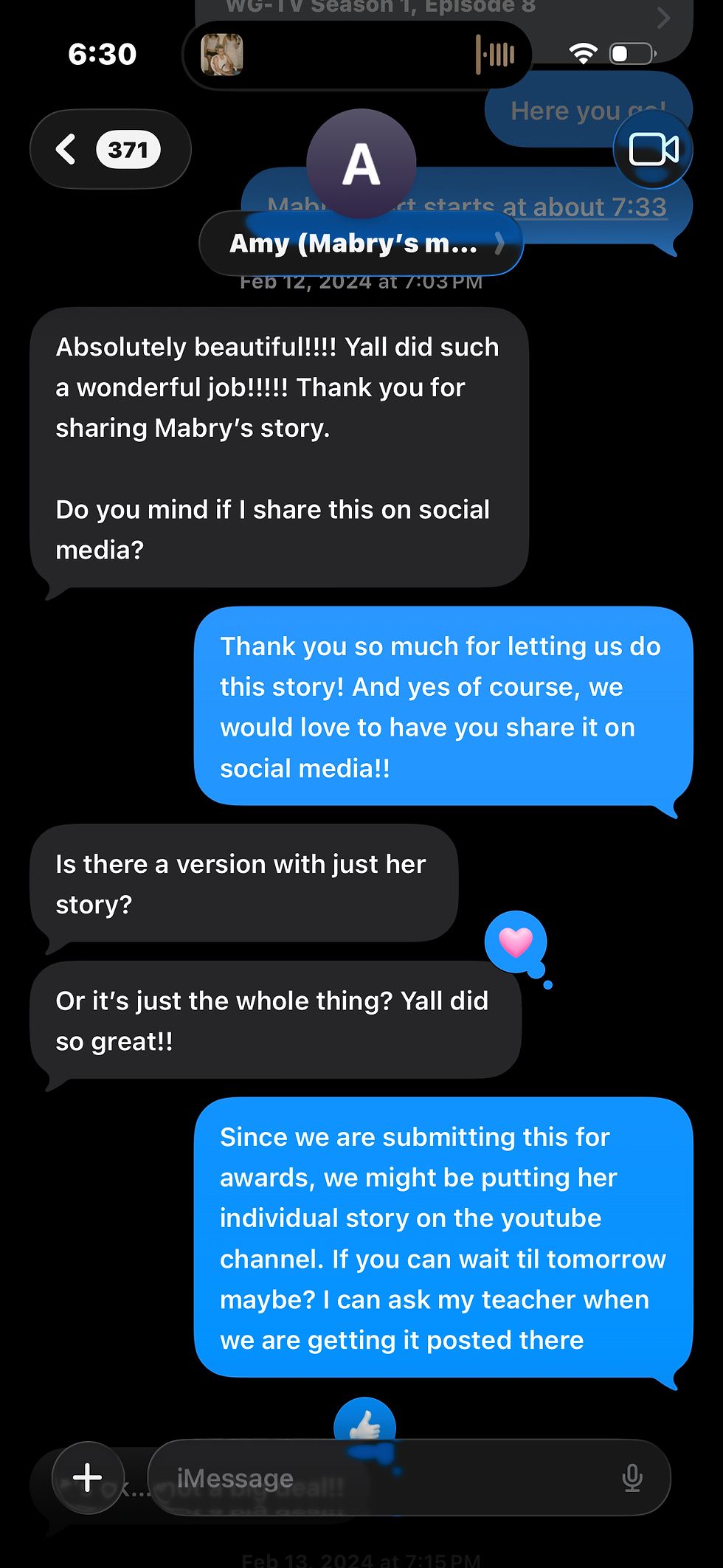
This refers to another story previously mentioned (this one is in the Editing, Leadership, and Team Building section). We had reported about Mabry, a girl who was a part of a program in our district but was soon to age out of it.
On the left, there are a few messages between me and her mom. I made sure to stay in contact with her and send out the final product to ensure she was happy with the way we reported about Mabry’s story.
On the right, there is a screenshot of the anchor tag I had written and how we wanted to highlight the significance of Mabry’s story to others. This was a very sensitive story, and I had to be super careful about how I was wording or conveying things.


On the left is a screenshot of the initial email I sent to one of the trainers asking if I could interview her for my package. I made sure to remain in constant communication with her and to confirm with her what footage I could or couldn’t use. Because of there being shots of players receiving treatment, there were potential HIPAA rights that I could have violated, working with her allowed me to confirm what I could utilize that wouldn’t violate the students’ rights.
On the right is a list I has asked from the Golf coach to confirm who everyone was in our group picture of the team. It is important to ensure that the content being published is accurate. This process allowed me to ensure that my work and the work of others was correct and verified information.
